coil
A tangible physical interface for Grasshopper. Translating parametric node logic into spatial gestures for 3D print ceramicists.
Role
Interaction Hardware Designer
Type
Hardware & TUI
Year
2025 - 2026
Context
RCA / Imperial
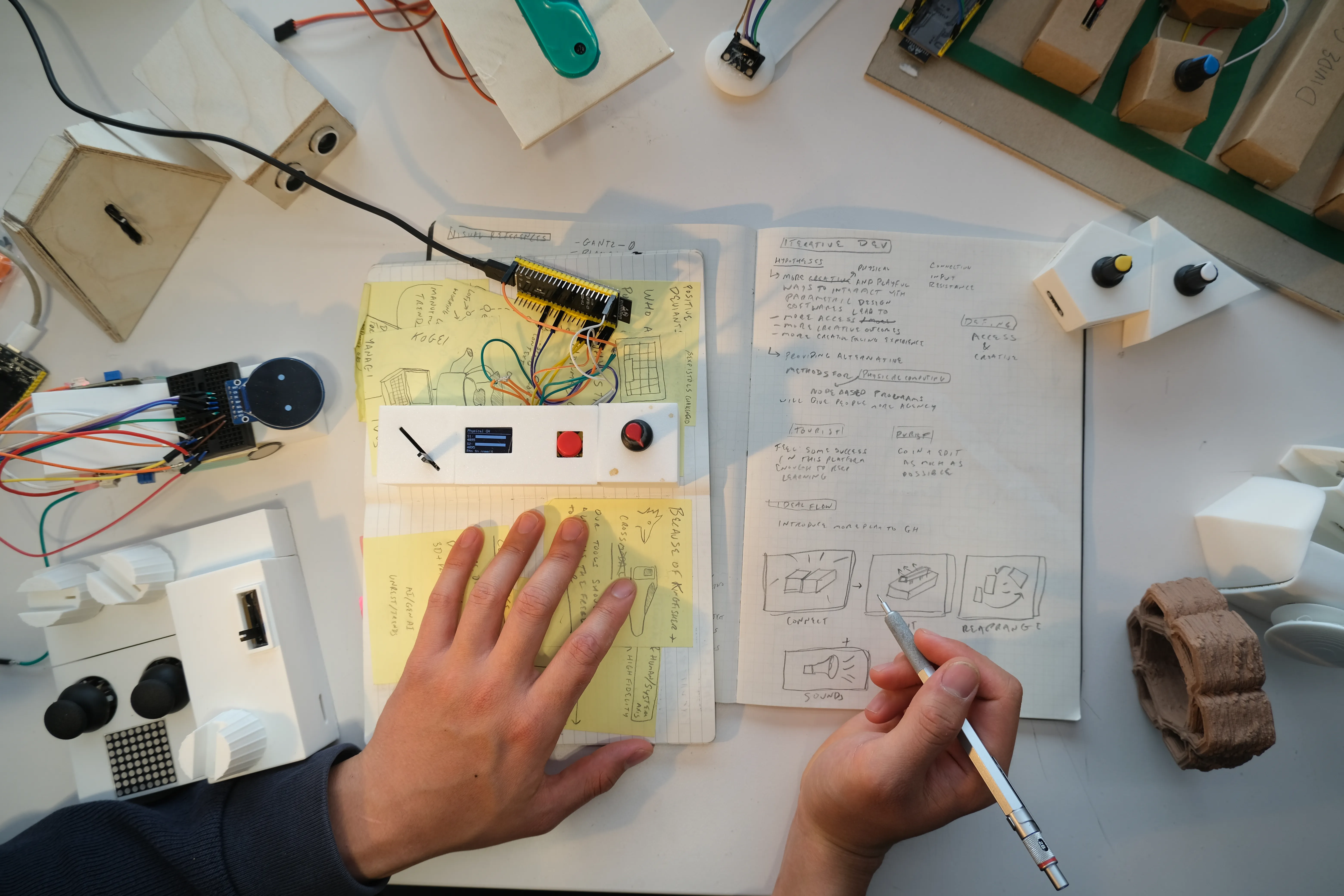
Iterative electronics prototyping and hardware testing for the ESP32 and IMU sensor architecture.
overview
COIL is a tangible user interface built to bypass the steep learning curve of visual programming in digital fabrication. Co-designed with ceramic artist Fred Gwatkin, it translates the abstract logic of Grasshopper into embodied, spatial memory. Fred understands clay and 3D printing intimately, but node-based CAD creates a technical barrier to his organic workflow.
The goal was to design an interaction model distinct from standard mouse input and VR environments like Gravity Sketch. By prioritizing maker intent over software architecture, COIL allows spatial thinkers to manipulate complex parametric forms entirely through physical intuition.
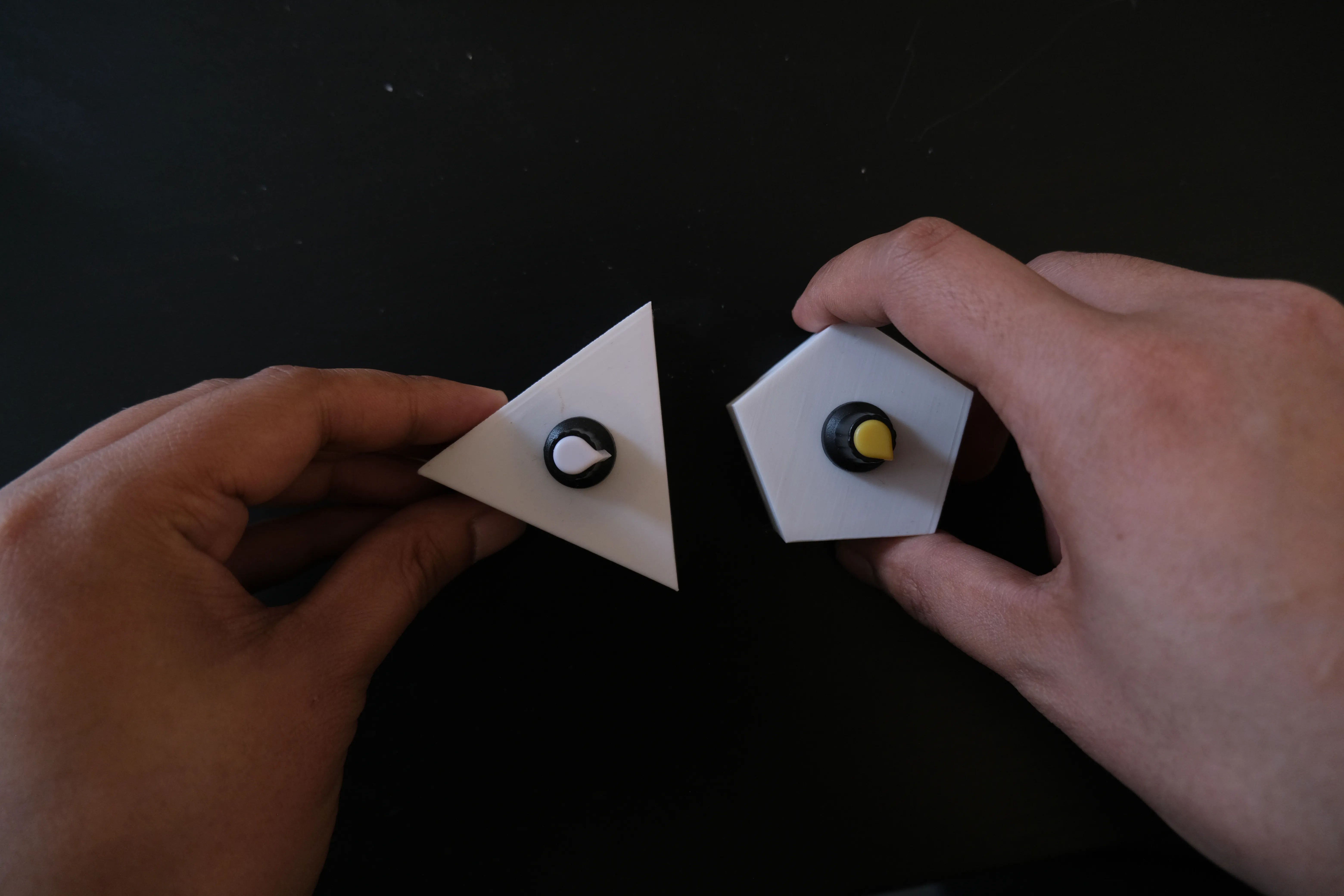 01
01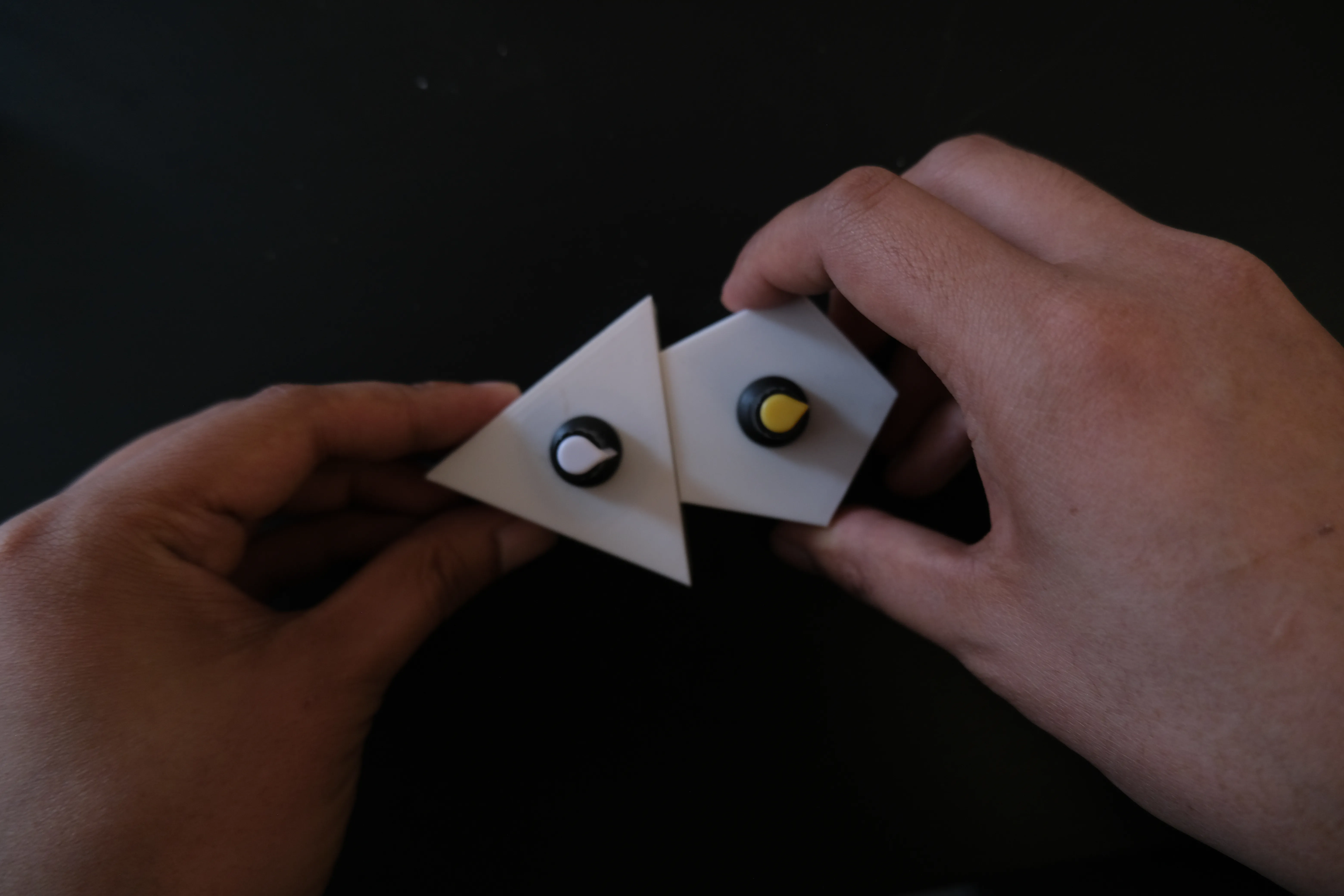 02
02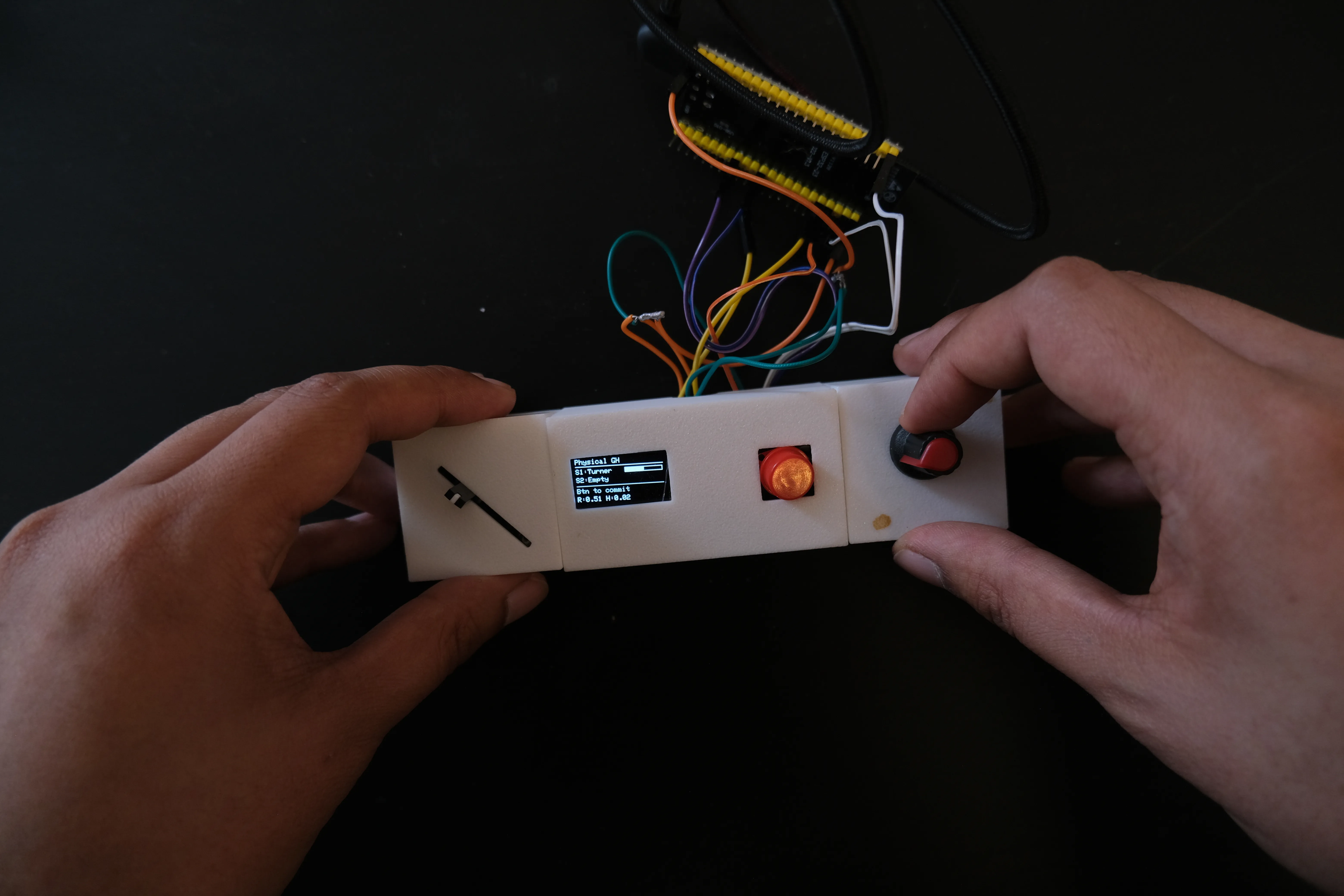 03
03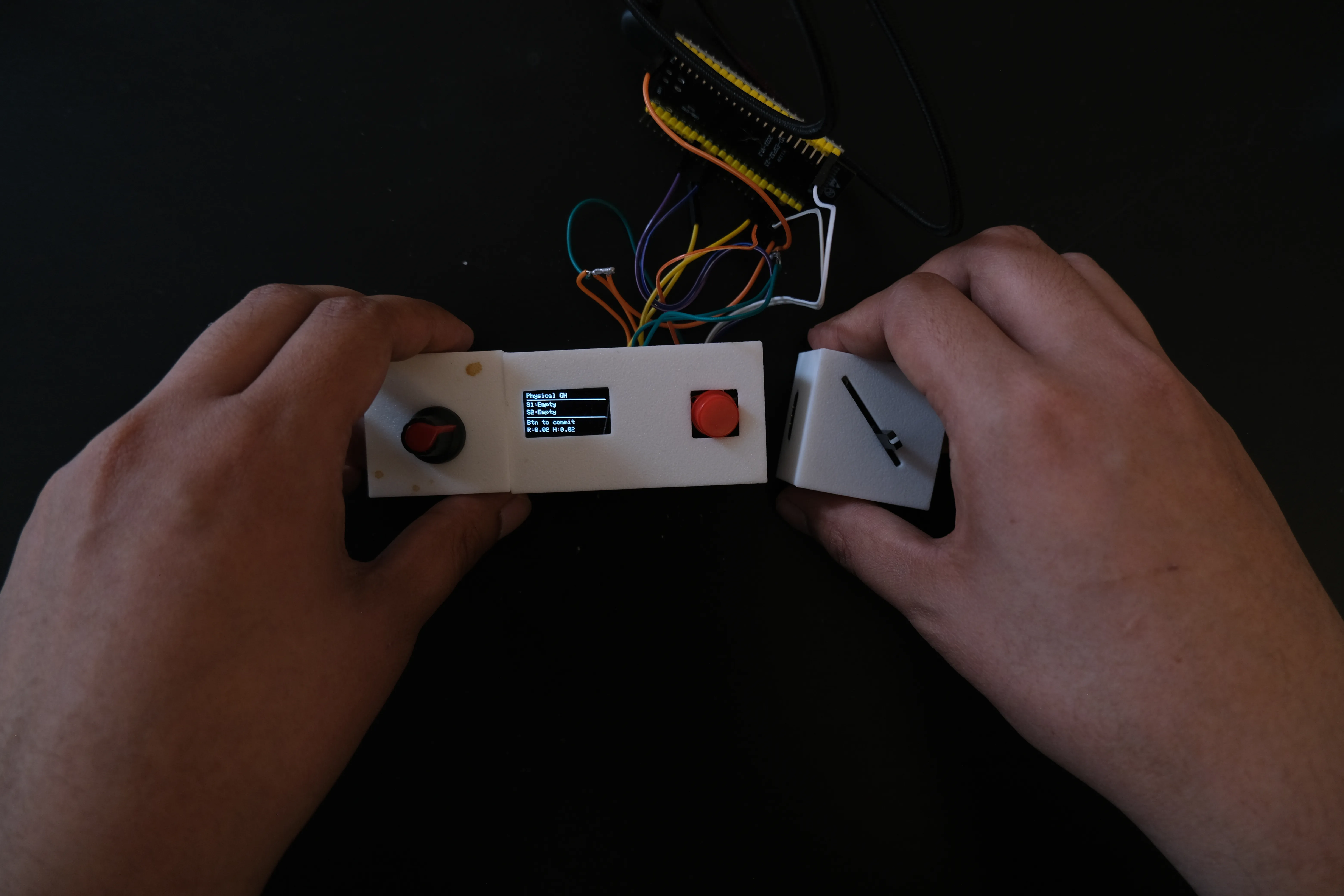 04
04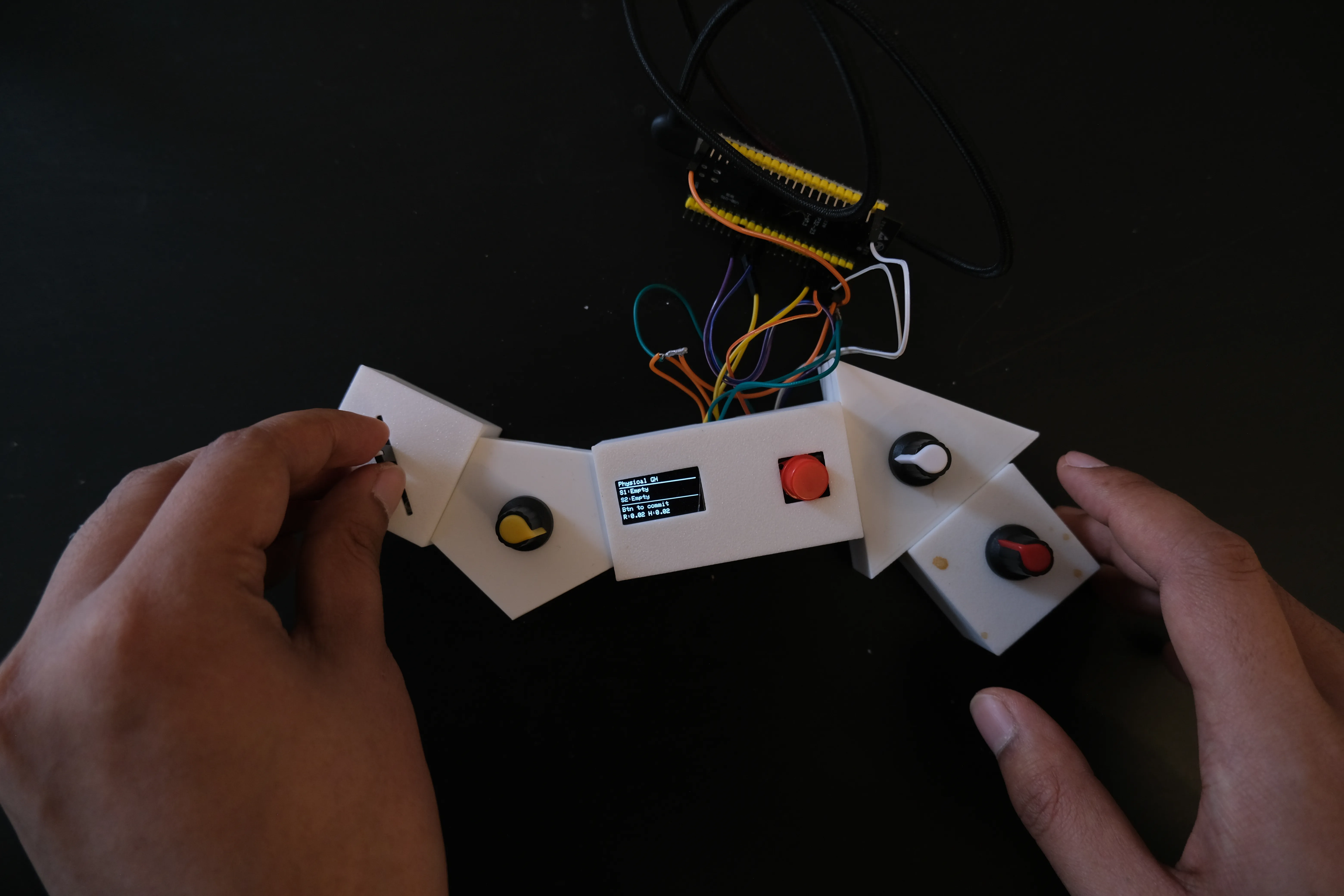 05
05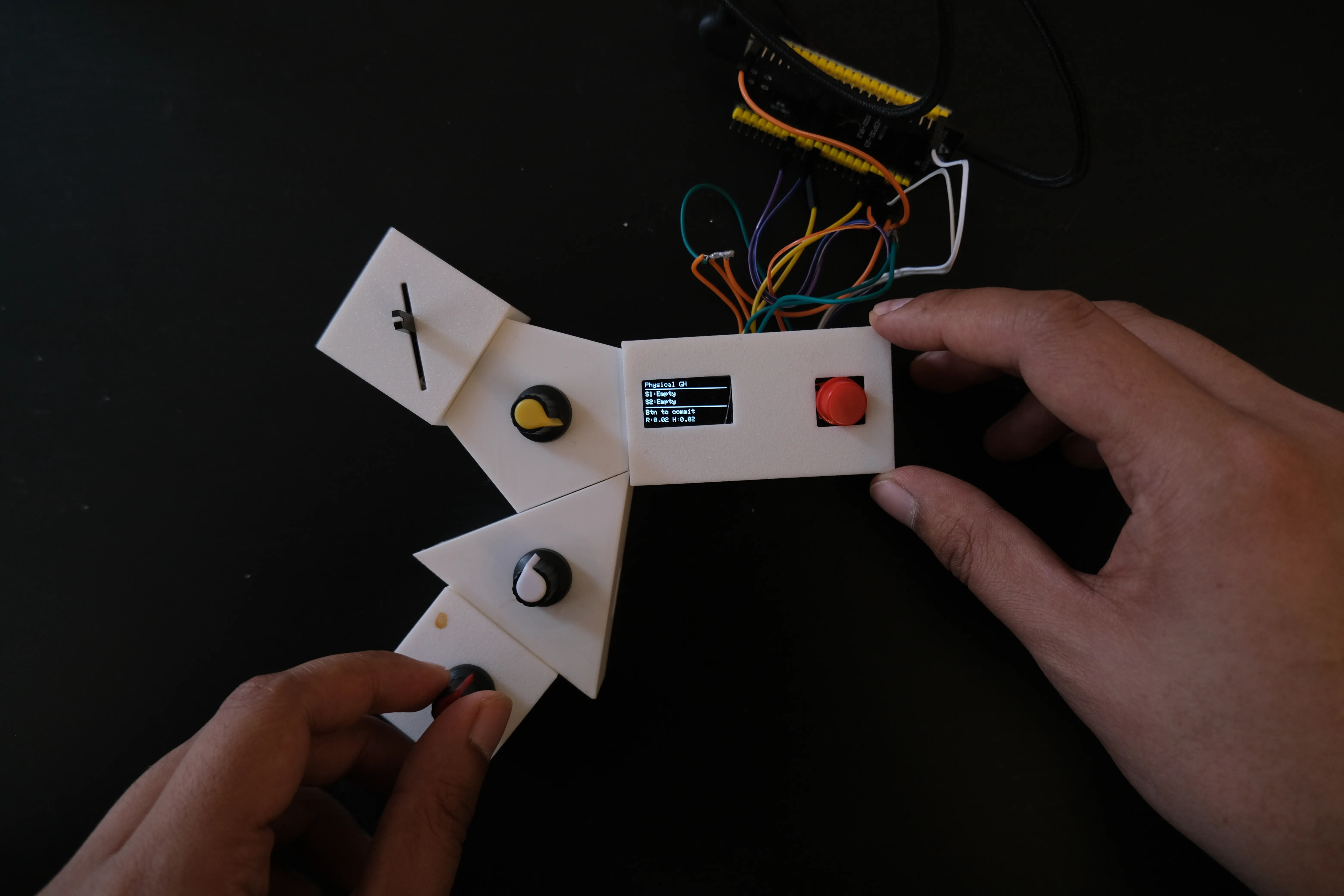 06
06Physical modules mapped to digital actions. Swapping a module creates immediate, delightful visual transformation on the digital canvas.
hardware & interaction
The core controller is a deformable silicone-covered wire coil. IMU sensors capture the physical deformation and map it directly to the overall profile of a digital vessel. Bending the wire literally bends the digital form.
For localized surface detailing, users attach tactile modules onto magnetic pogo pin nodes located along the coil. Each module contains a unique resistor value. When snapped on, an ESP32 reads the resistance to identify the specific tool. Clipping a spiky module to the top of the coil instantly sends serial data via a GhPython script to apply a Weaverbird Stellate texture to that exact region in Rhino.
status
The Grasshopper architecture and core serial communication are functional. I am currently finalizing the PCB layout for manufacturing and preparing the hardware for validation testing with Fred. The final interactive build will be presented at the Royal College of Art graduate show in July.