numa
A rotational touch instrument exploring how physical gesture becomes musical expression
Role
Designer and Engineer
Type
Instrument design
Year
2024 - 2025
Context
RCA / Imperial
final prototype - 3D printed shell opened to show internal wiring, two rotary encoders and Bluetooth module
overview
Numa is a handheld instrument that uses rotation as its primary input. Two independent rotary encoders sit inside an organic 3D printed shell, each responding to how the player turns, pulls and pushes the object in their hands. The instrument translates these physical gestures into sound in real time - not as a controller sending MIDI to a computer, but as a self-contained object that makes its own sound.
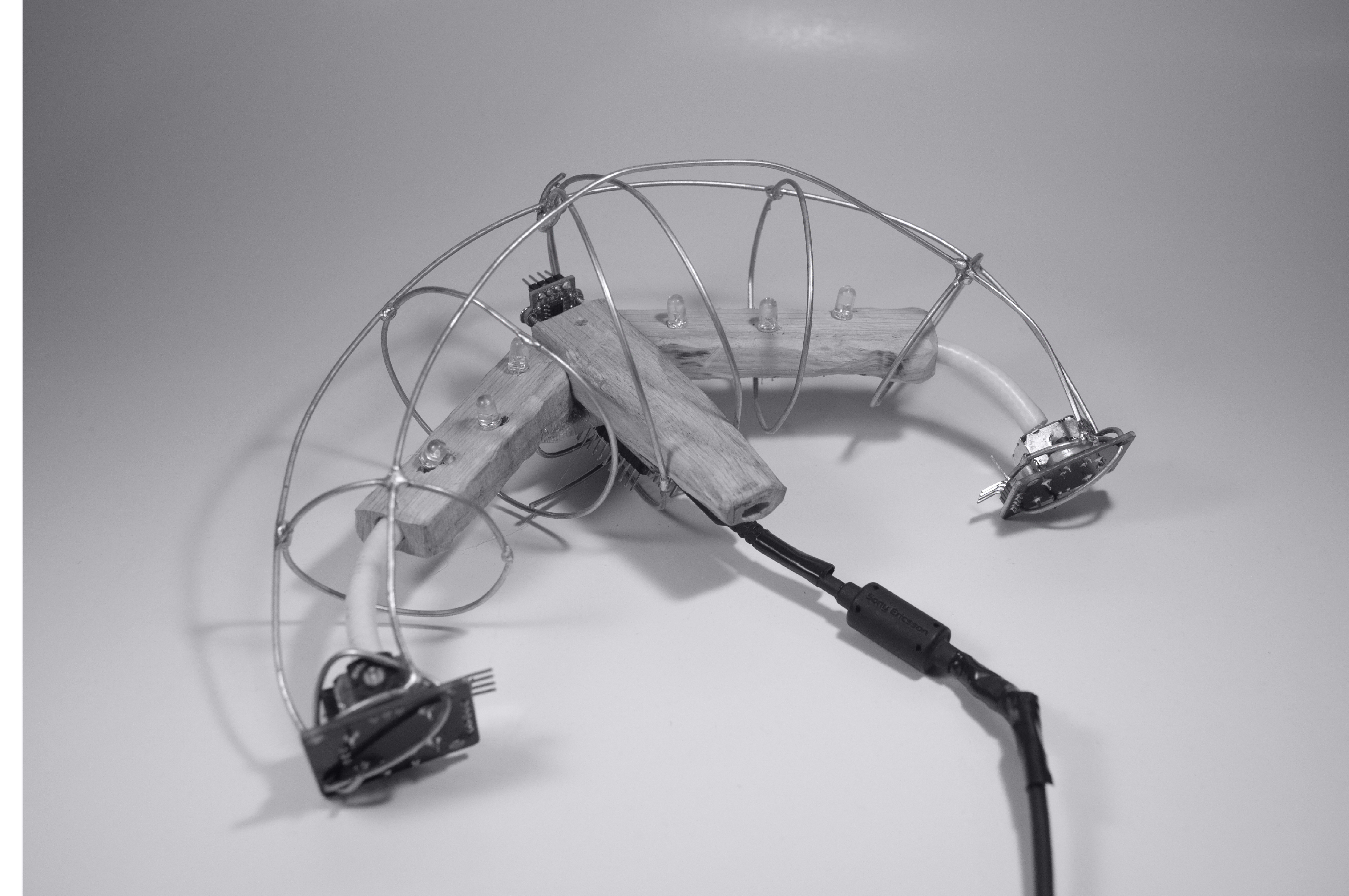
The project went through three distinct research directions before arriving at the final form: an exploration of breath as input, a paper and foam surface prototype testing haptic texture, and the final rotational sensing approach. Each direction taught something different about how the body relates to a small object held in two hands.

interaction vocabulary sketches - reach and pull (left), hold and spin (centre), loop and repeat (right) - the three core gesture types the instrument responds to
gesture and interaction
Before any physical making, the interaction vocabulary was sketched out as gesture drawings - abstract marks showing the quality of movement rather than the object itself. Three gestures emerged: reach and pull (a linear motion that stretches or compresses a parameter), hold and spin (a rotational motion around a central axis), and loop and repeat (a circular gesture that locks a pattern into place).
These gestures became the design constraints for everything that followed. The instrument had to be holdable in two hands and respond to rotation, stretch and loop without requiring the player to look down or think about what they're doing.

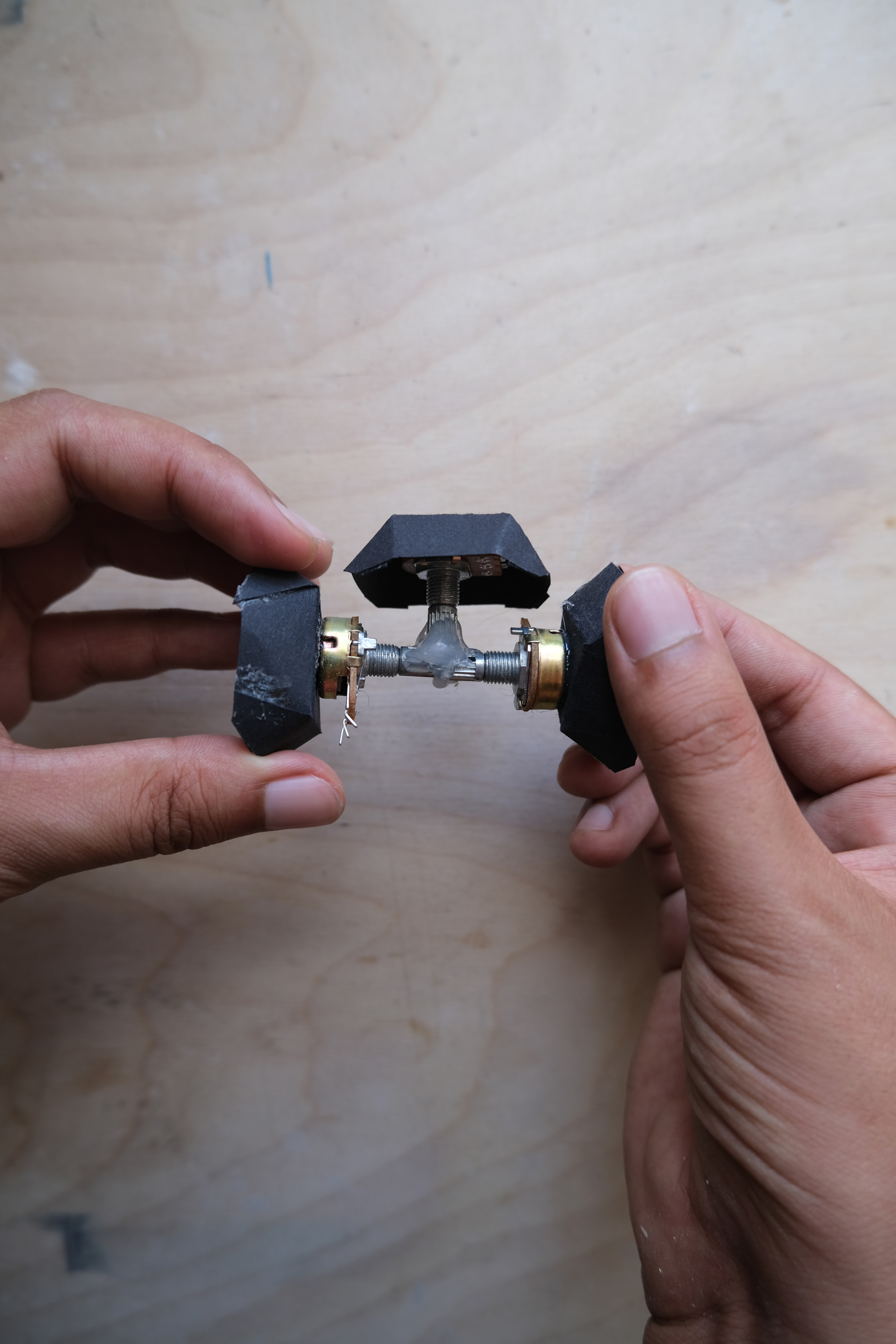
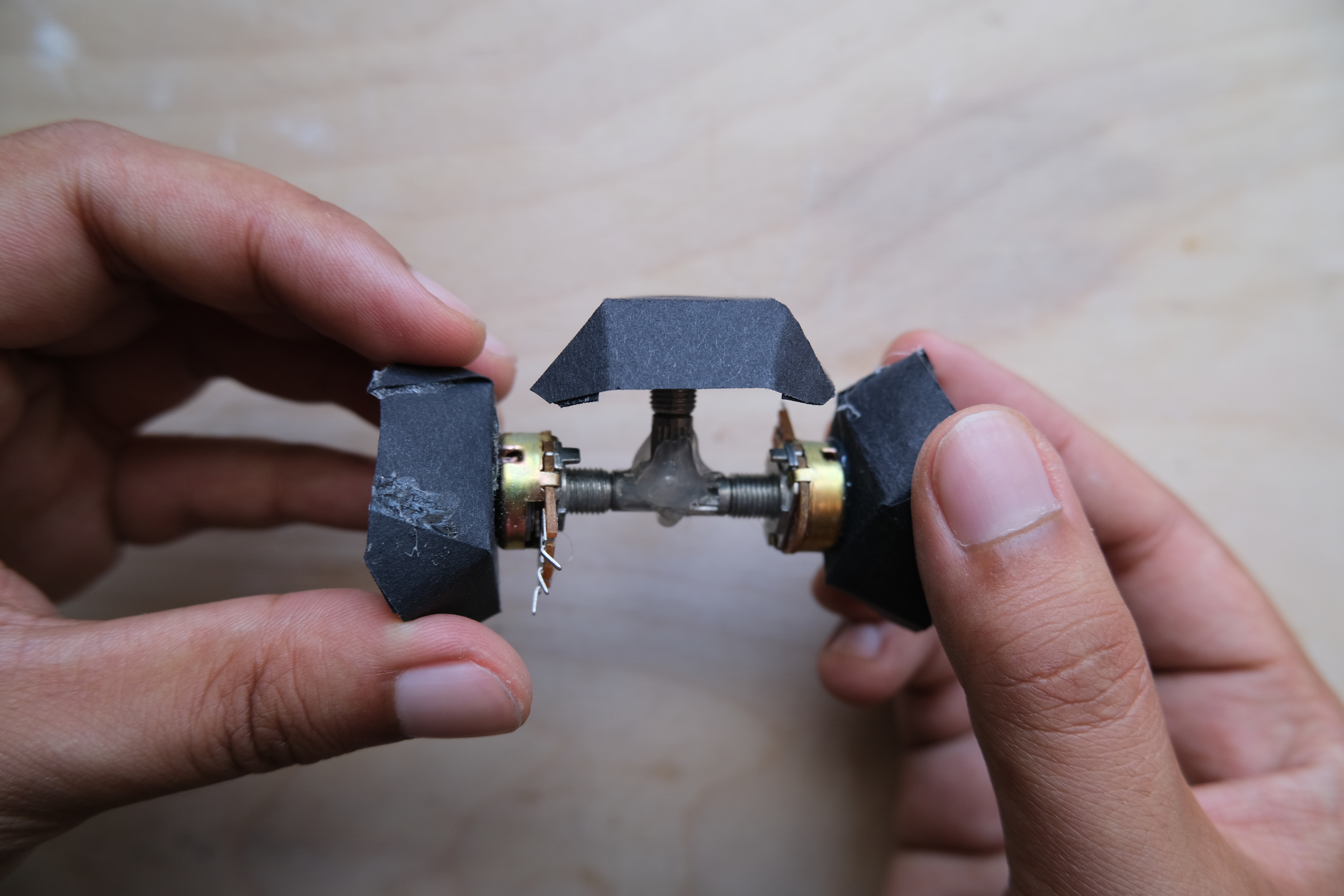
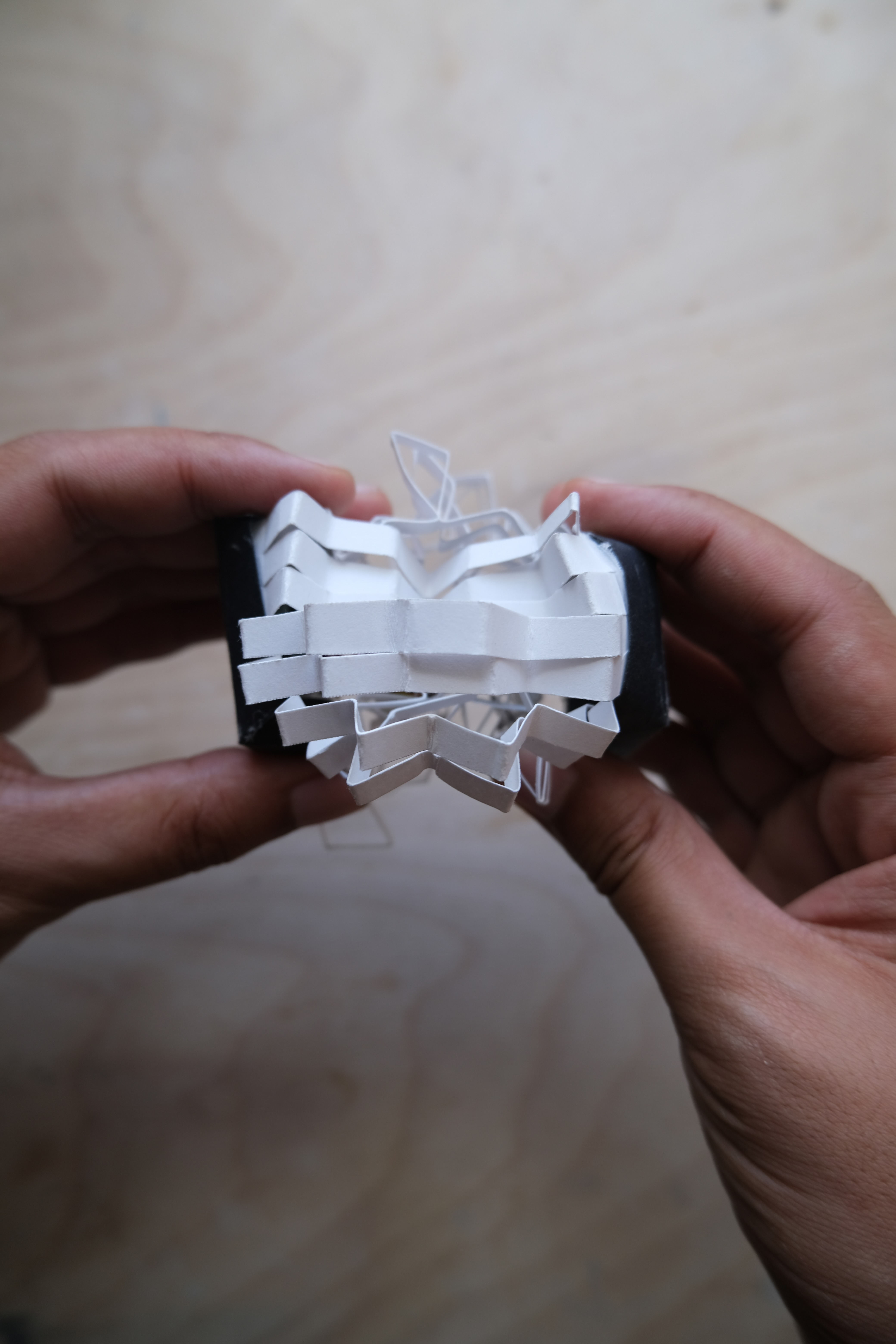
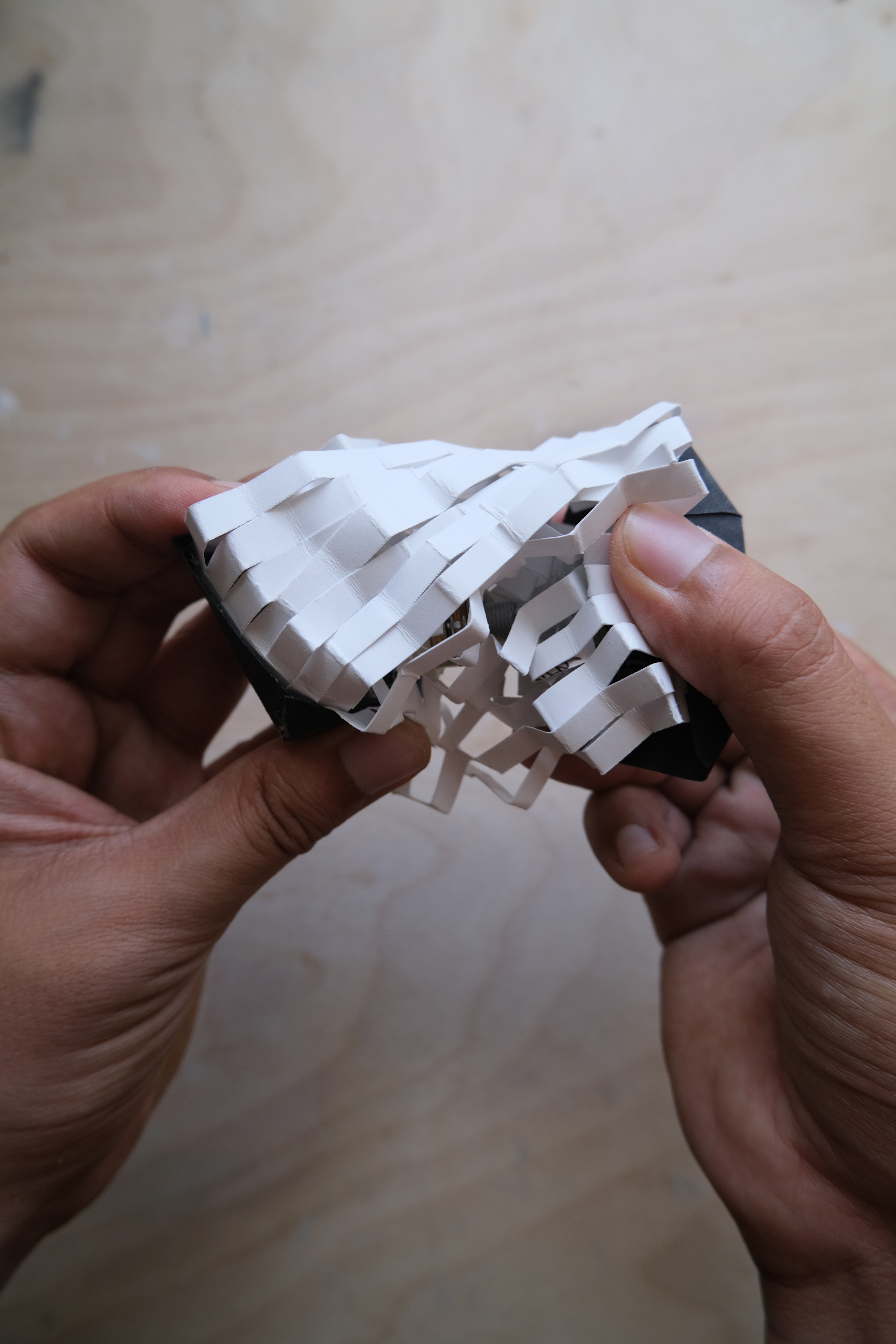
paper and card surface prototypes testing haptic texture (left, centre) - the central potentiometer shaft mechanism before enclosure (right)

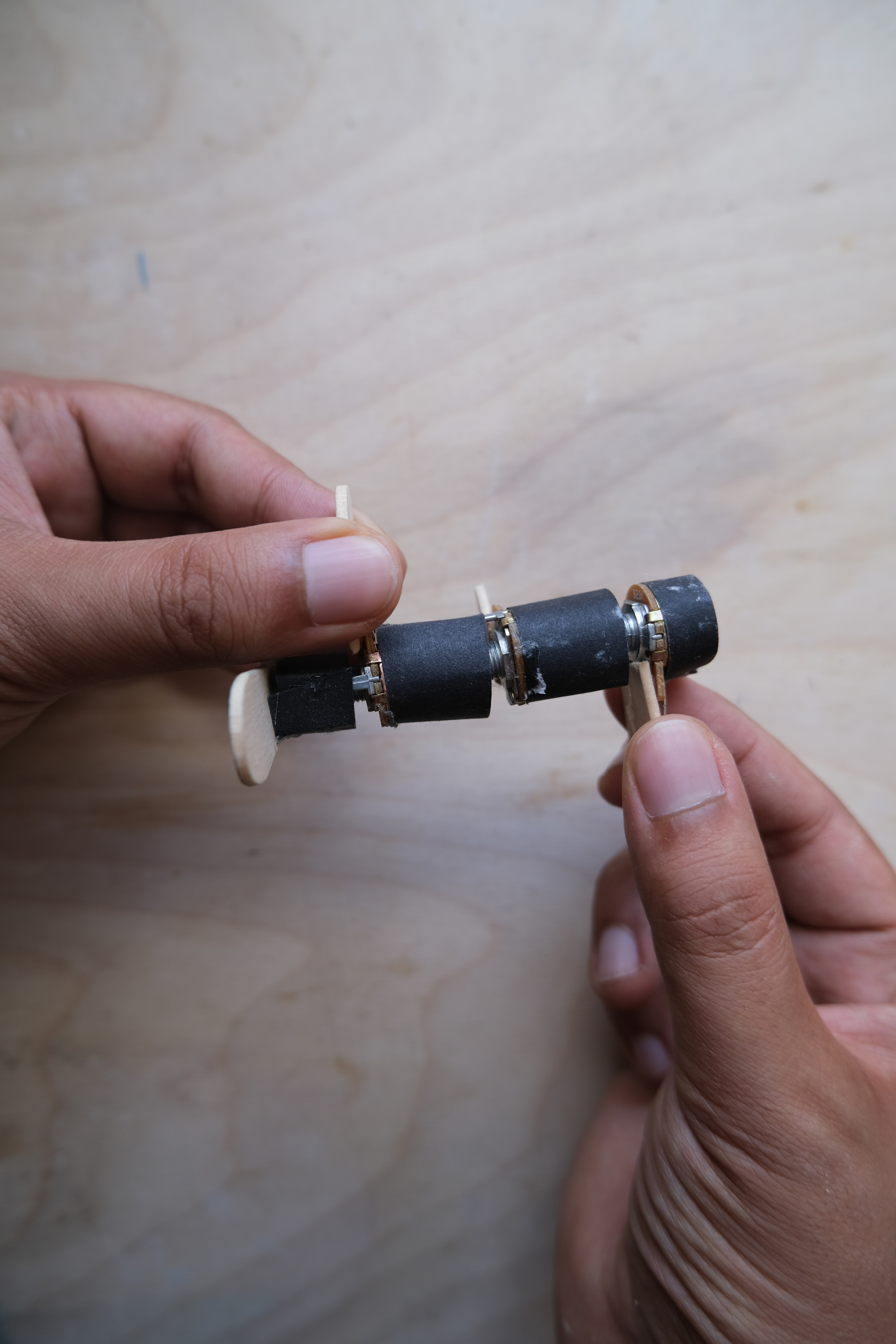
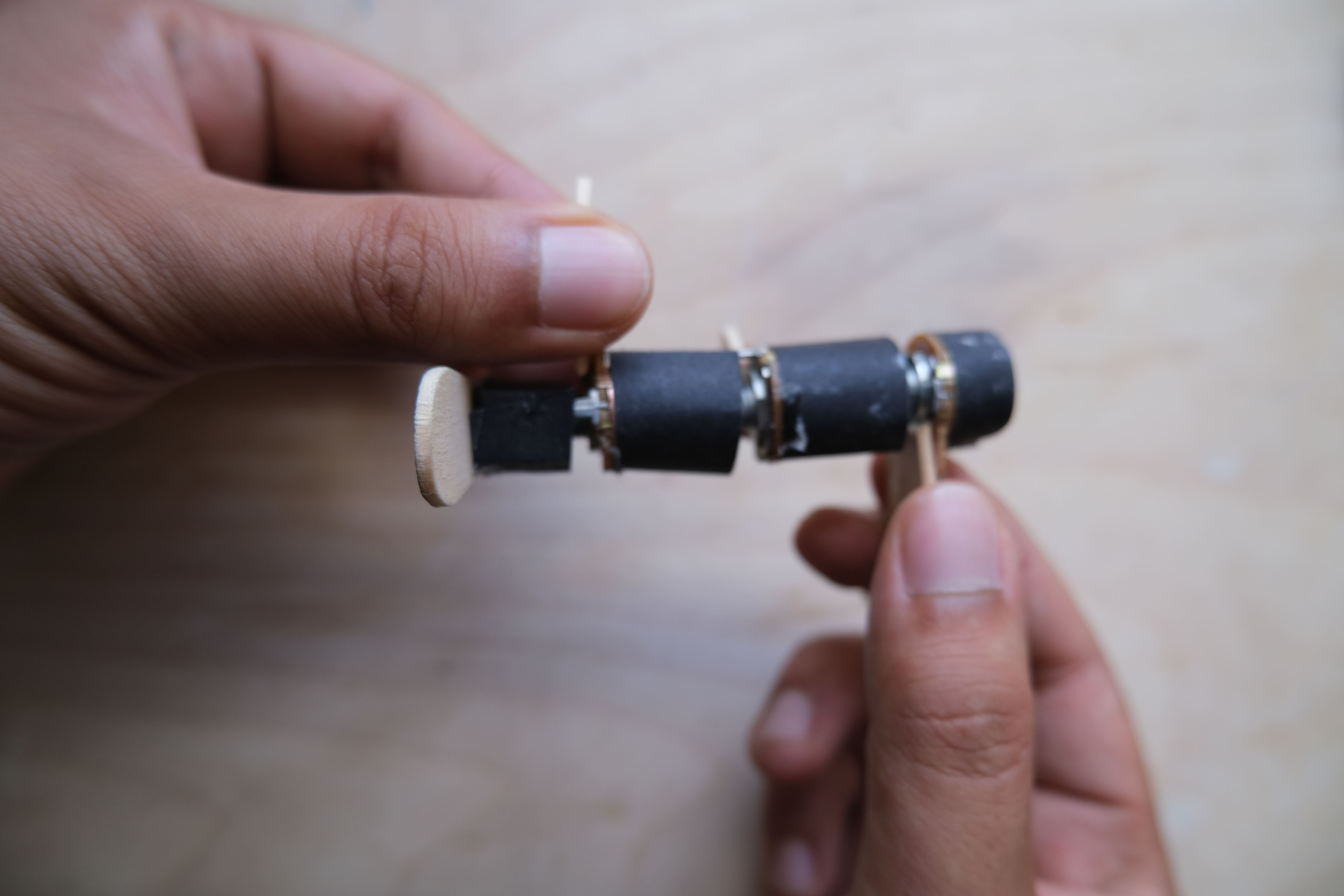
three stacked potentiometers on a wooden dowel with wooden disc ends - the first functional sensing prototype, testing multi-axis rotation before the final enclosure
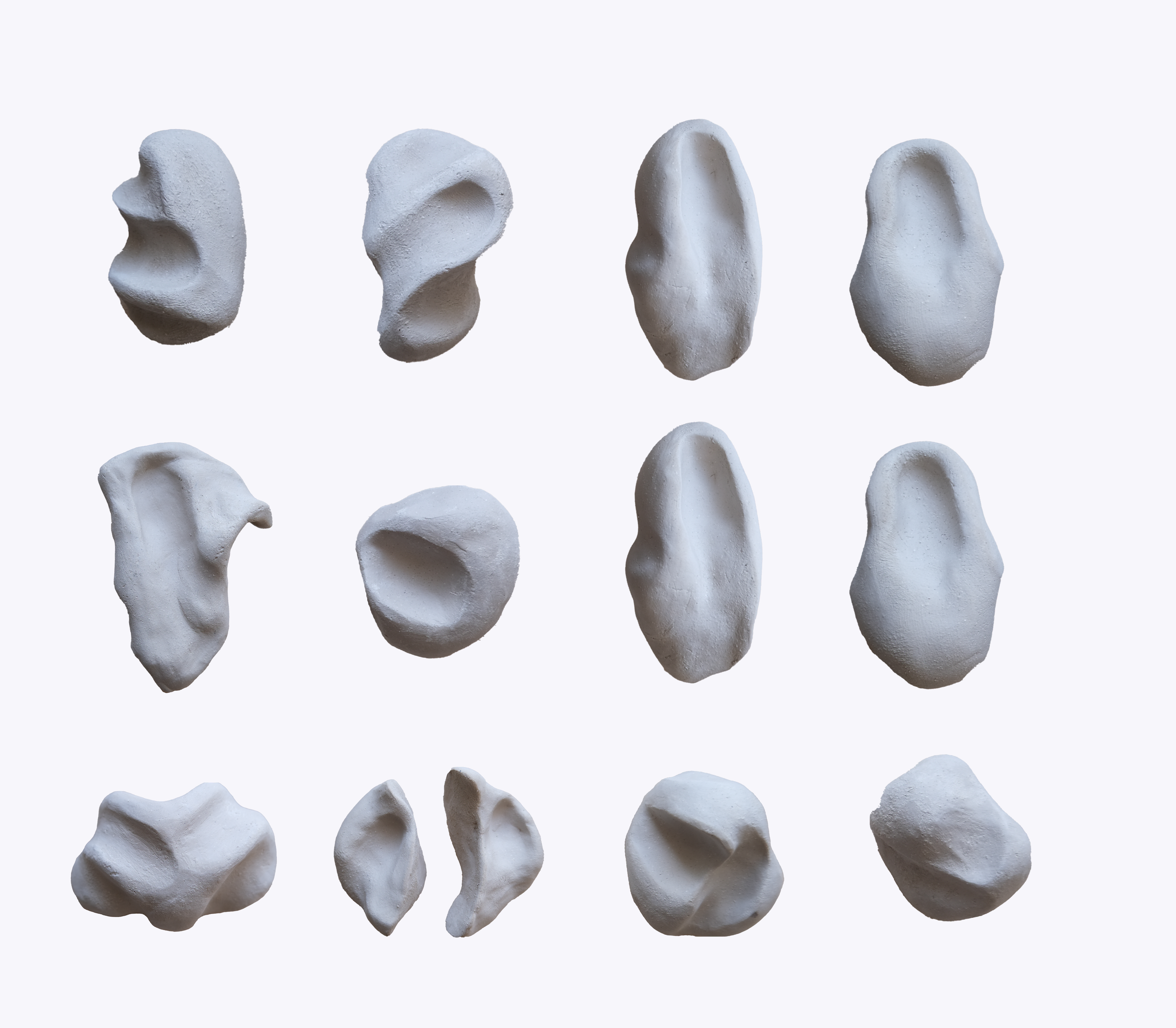
clay form studies - 12 variations exploring the organic shape of the instrument body, focusing on how the object sits differently in two hands versus one
form development
The form was developed through clay rather than CAD. Twelve variations were made by hand, each testing a different answer to the same question: how does an object feel when you hold it in both hands and rotate it? The clay forms range from ear-like shells to smooth ovals to irregular lumps that force the hands into a particular grip.
The final shape came from combining the most successful grip geometry from the clay studies with the constraint of housing two potentiometers and a circuit board inside a 3D printed shell. Organic on the outside, engineered on the inside.
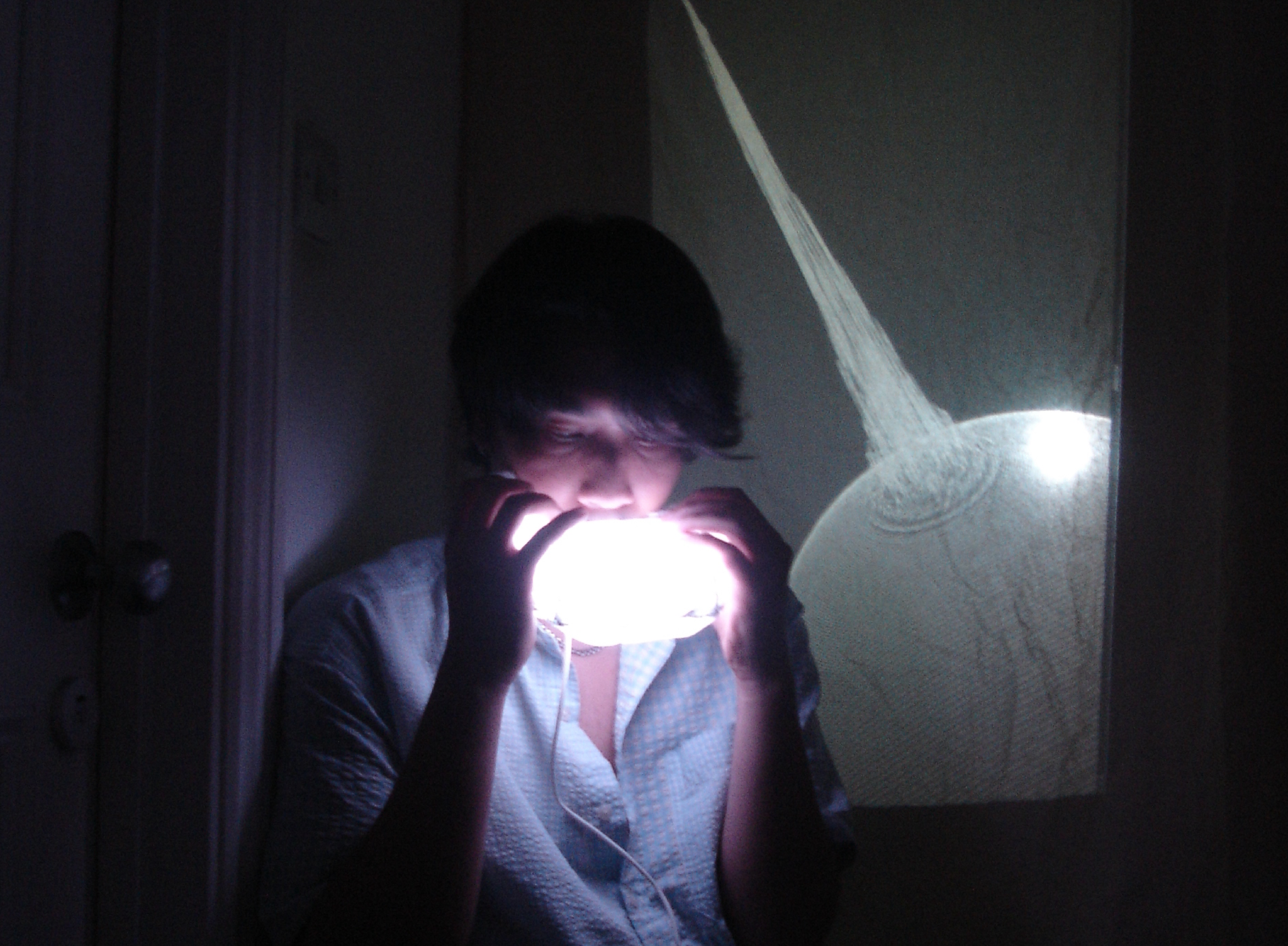
breath direction - a person breathing into a glowing soft object in darkness, light responding to the breath. this direction was explored and set aside before arriving at rotation as the primary input
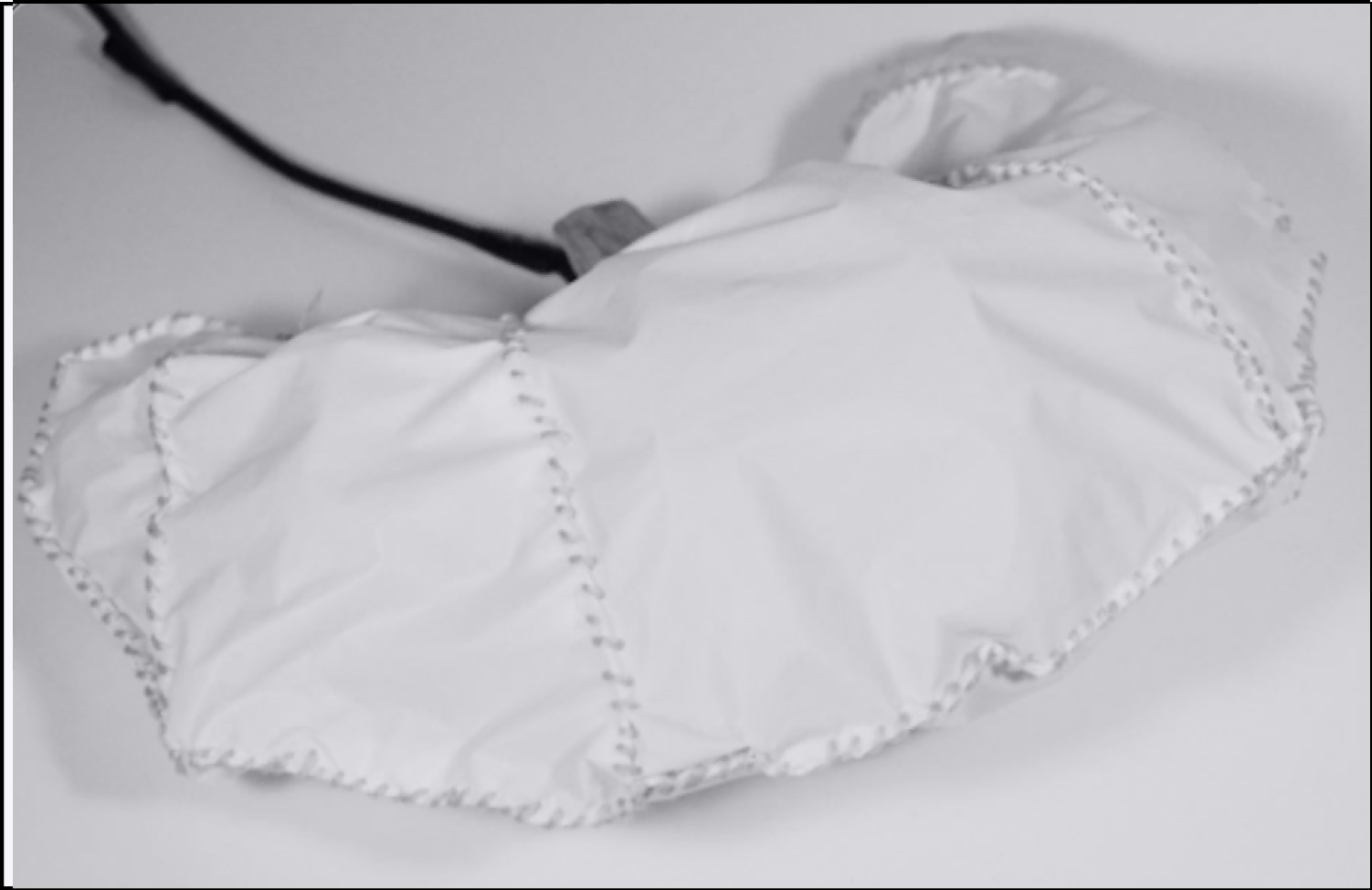
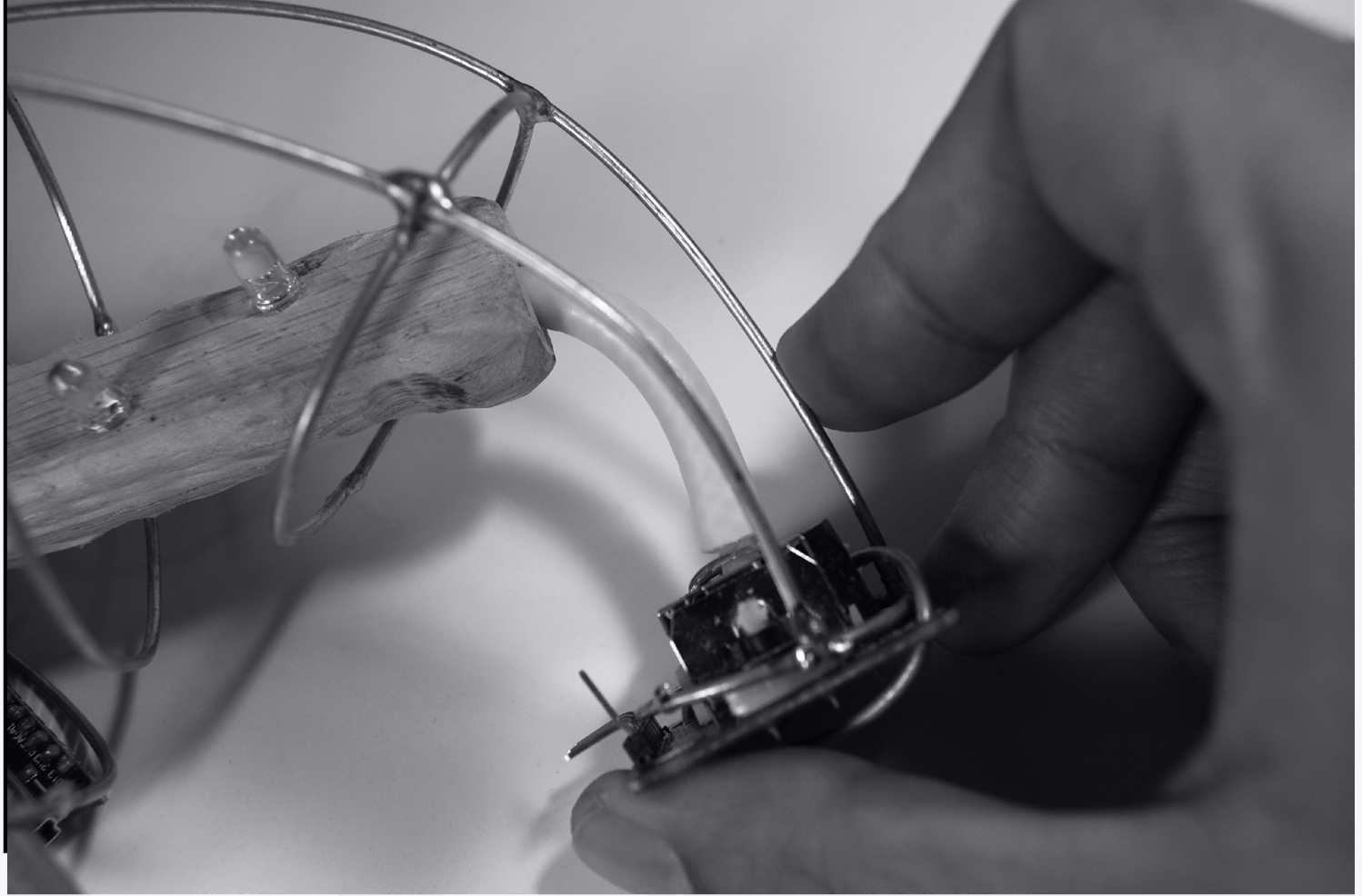
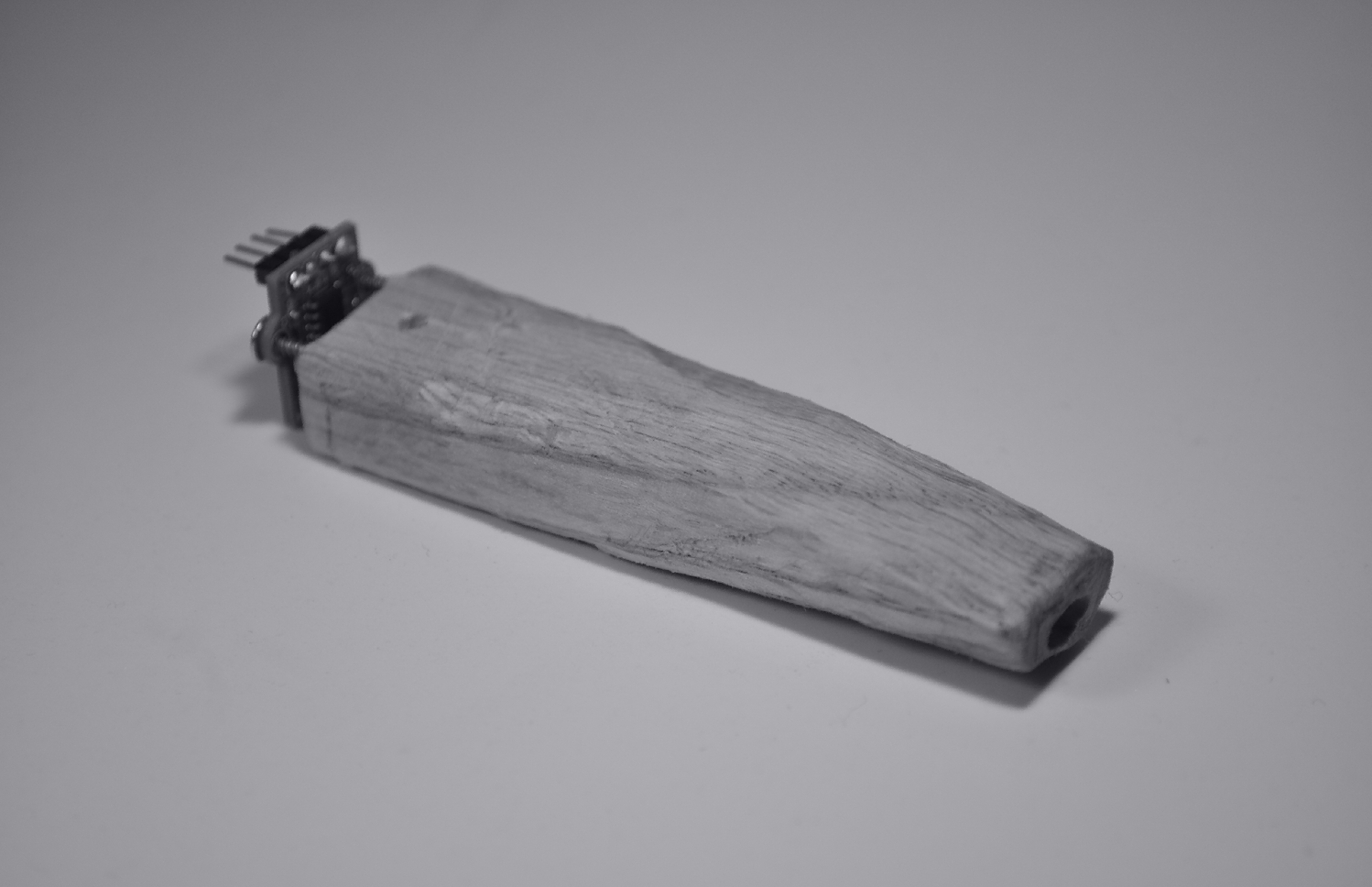
fabric stretched over a wire frame (left), wire frame with wooden handle and LED circuit (centre, right) - the breath-based prototype direction before pivoting to rotation
final prototype
The final prototype is a 3D printed shell in two halves that hinge open. Inside: two rotary encoders, a small circuit board, orange and blue wiring, and a Bluetooth module for wireless connection. The shell closes around the electronics and the encoders protrude through small openings so they can be turned with the thumbs while the hands hold the body of the instrument.
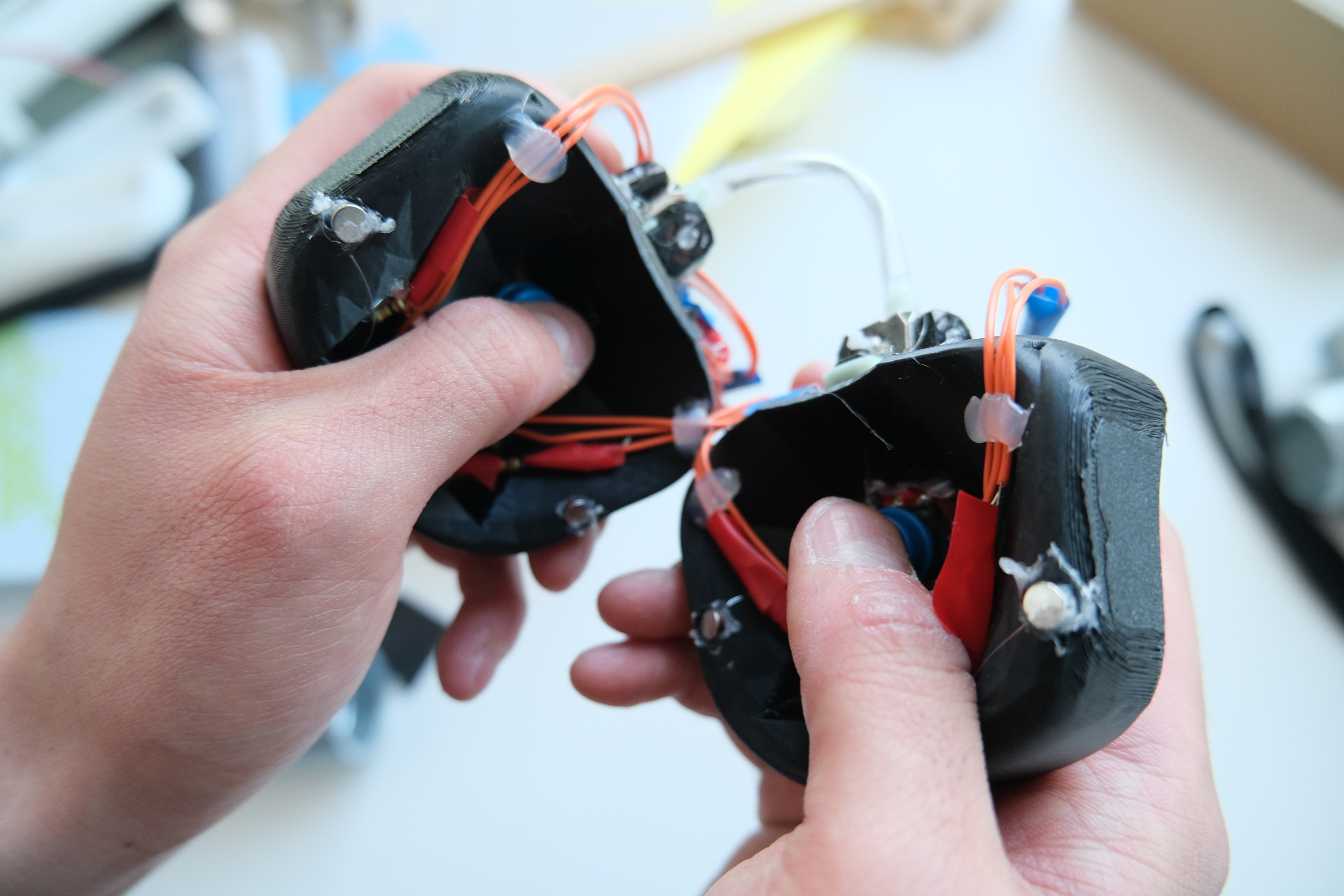
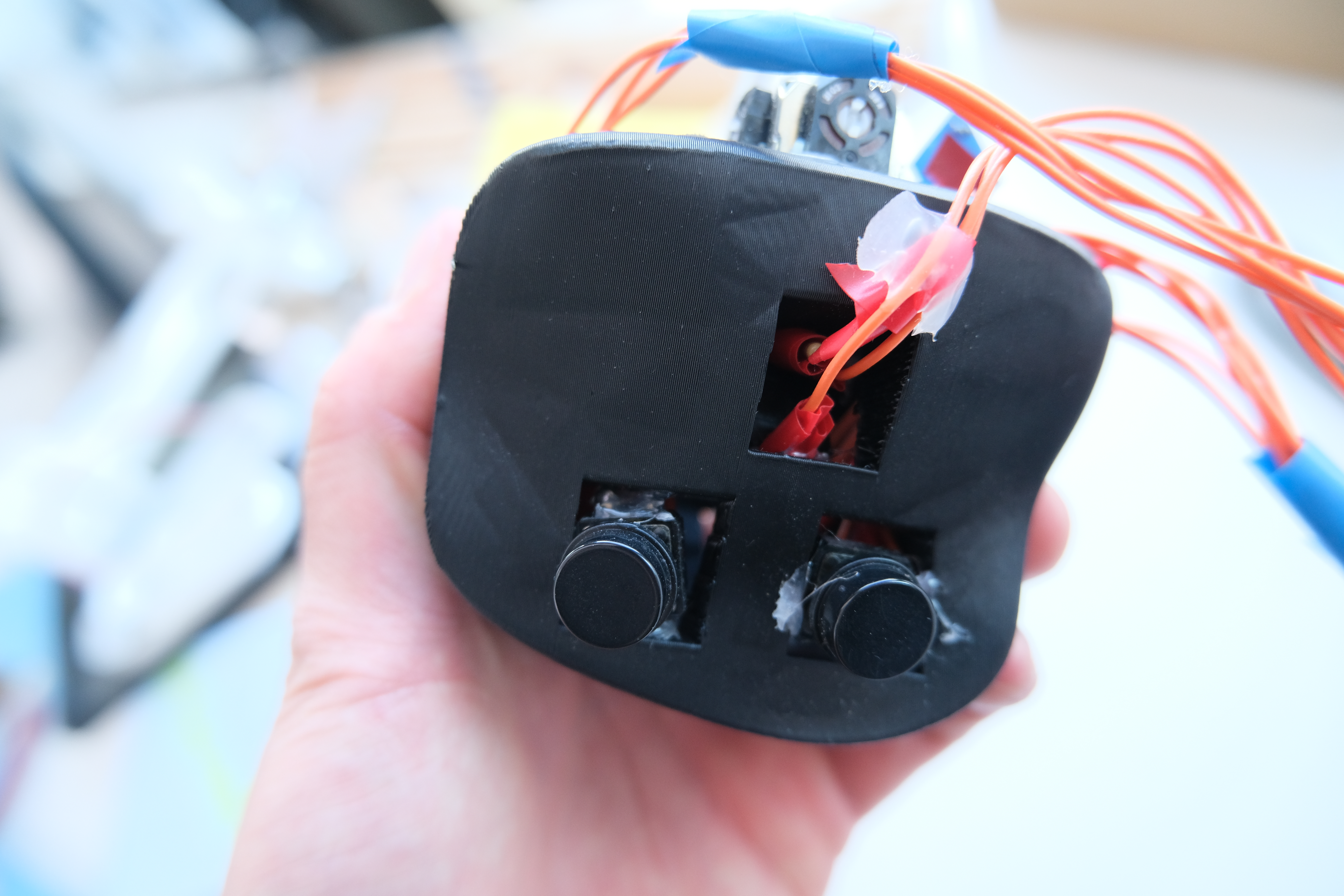
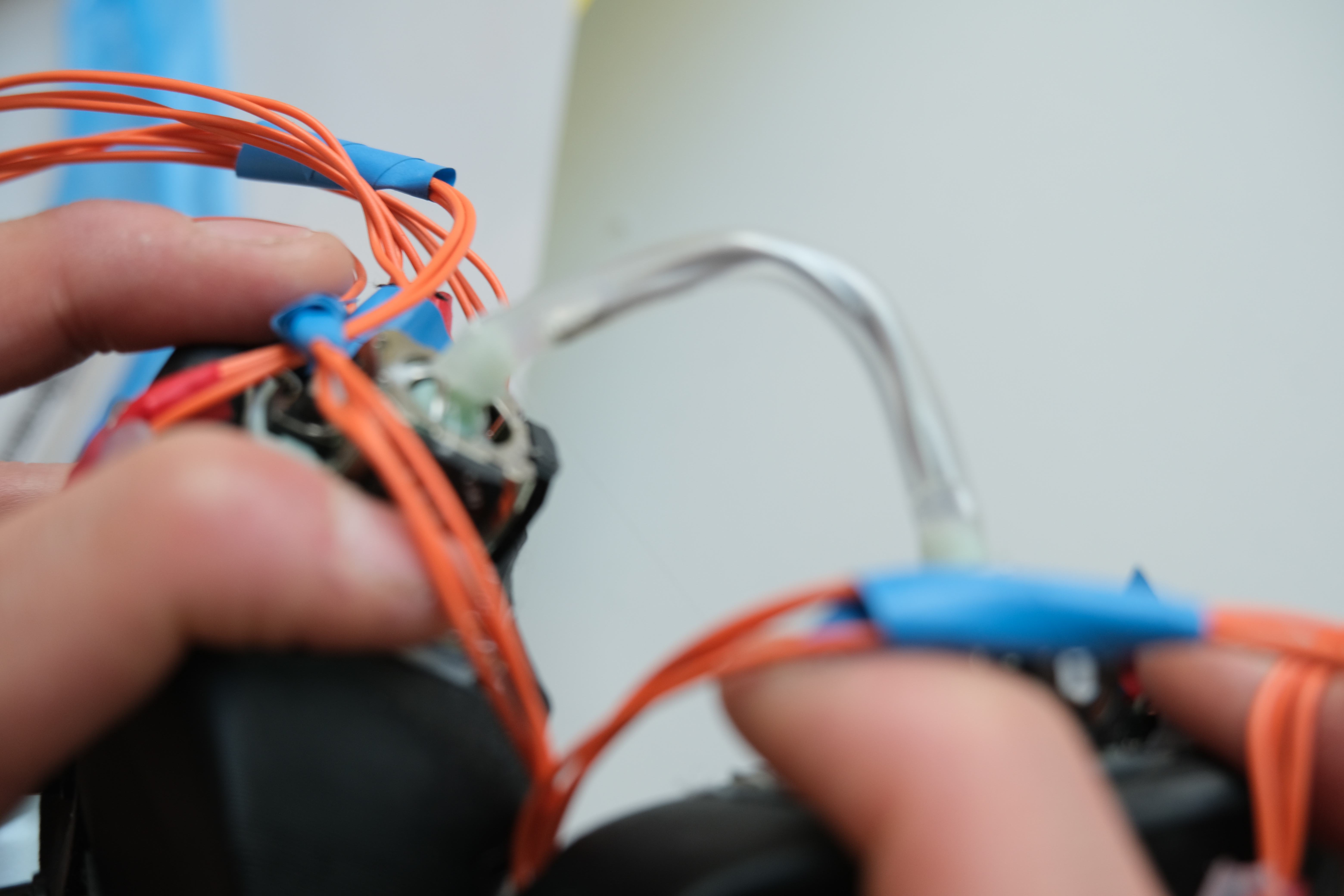
final prototype - assembled (left), open showing internal layout (centre), wiring detail with orange signal and blue power cables (right)